What Apartment Complex Maintenance in Everett Looks Like When It Actually Works
Apartment complex maintenance operates on a straightforward system. Problems accumulate. At some point they become visible or reported. At that point they are addressed. The system is self-correcting in the sense that fire is self-correcting: it does eventually stop, usually after consuming more than was necessary. At Perfect Touch Landscapes, our apartment maintenance services in Everett are built on a different model. The goal is not to respond to accumulated problems but to prevent them from accumulating in the first place, which turns out to be less expensive, less disruptive, and considerably less interesting as a maintenance story.
Why Reactive Maintenance Costs More Than It Appears To
The reactive maintenance cost calculation usually focuses on the repair invoice. That is the visible number. The invisible numbers are more instructive.
A drainage outlet cleared in September as part of a scheduled fall preparation visit costs one amount. The same drainage outlet cleared in November after backing up and contributing to a flooding event near a building foundation costs that amount plus water damage remediation plus the emergency service call rate that applies when the situation has become urgent. The ratio is not subtle.
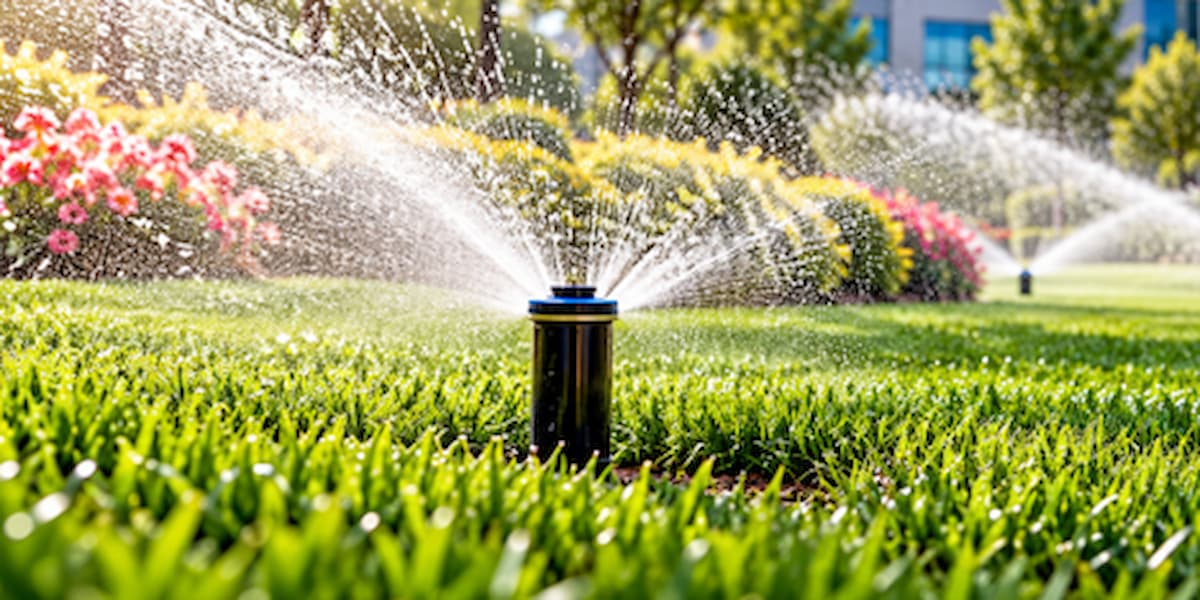
An irrigation head adjusted during a spring system walkthrough costs fifteen minutes of technician time. The same irrigation head, left unchecked through summer while delivering water to the hardscape edge instead of the turf zone it was supposed to serve, costs fifteen minutes plus the turf replacement required in the dry zone, plus the explanation to the property owner about why the water bill was elevated, plus the discovery that the dry zone had been thinning for the entire season.
These are not exceptional scenarios. They are the standard operating conditions of reactive maintenance, described in the language of their actual cost rather than the language of things that are difficult to predict.
What Full-Scope Apartment Complex Maintenance Actually Includes
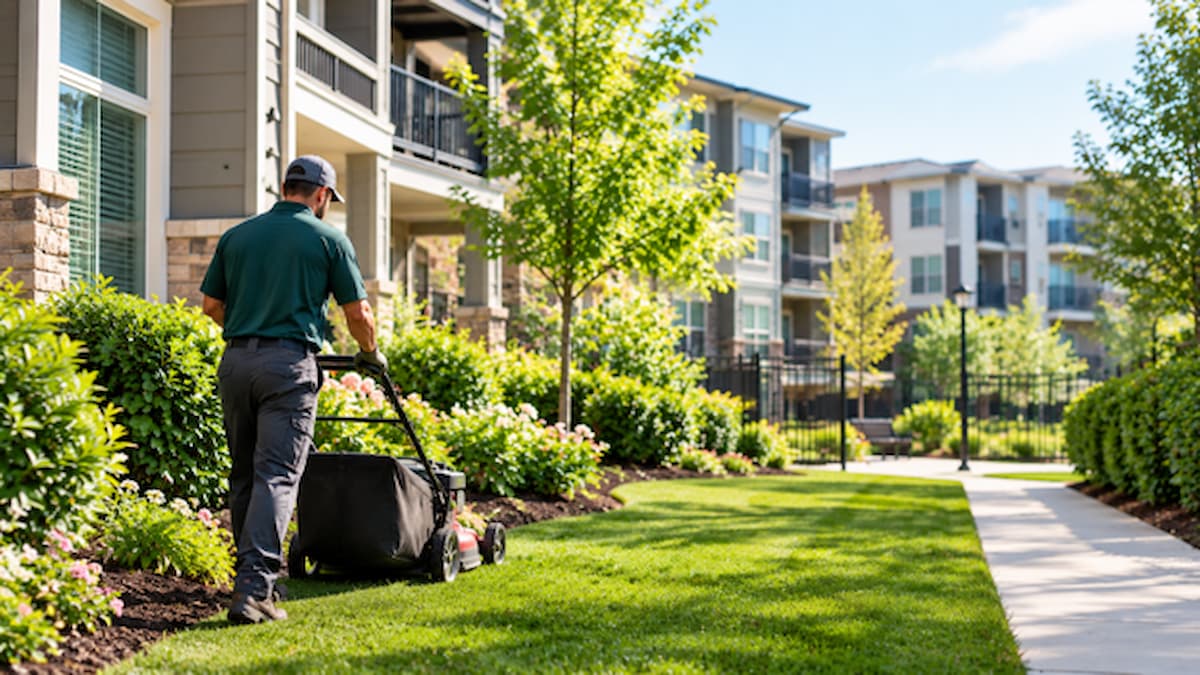
Apartment complex maintenance services in Everett at the full-scope level cover considerably more than mowing and leaf blowing. The complete scope includes:
- Turf mowing, edging, and seasonal fertilization on a schedule tied to actual growth rates
- Irrigation system assessment, calibration, and seasonal adjustment
- Planting bed maintenance, weeding, and mulch depth management
- Seasonal color rotation at high-visibility entrance areas
- Fall leaf cleanup across turf, bed, and hardscape zones
- Drainage outlet inspection and clearing before the rainy season
- Pressure washing of walkways, breezeways, and common hardscape surfaces
- Winter debris removal and post-storm cleanup
- Irrigation winterization coordination before first freeze risk
Each item affects tenant experience directly. Each is also more expensive to address reactively than on a scheduled basis. The two facts are related.
The Exterior Condition and Tenant Retention Connection
Property management research consistently links exterior condition scores to lease renewal rates. The connection is not subtle and it does not require complicated analysis.
Tenants evaluate their apartment in a broader context than the unit itself. How the grounds look when they arrive home. Whether the entrance area communicates active management or benign neglect. Whether common walkways are clear and maintained or accumulating the evidence of deferred attention. These impressions do not register as individual observations. They register as a feeling about the property, and that feeling influences renewal decisions more than most property managers formally track.
The exterior is the part of the property every resident encounters every day. It is also the part that most commonly gets managed reactively rather than proactively. Those two facts together explain a significant portion of the lease renewal variance across apartment communities in any market.
Scheduling Maintenance Around an Occupied Property
Apartment communities present a scheduling constraint that commercial office and retail properties do not. Residents are home at all hours. The standard commercial maintenance window of 8 a.m. to 5 p.m. on weekdays is not a low-traffic period at a multi-family property. It is when a significant portion of the resident population is home, working remotely, caring for children, or otherwise present and fully capable of forming opinions about equipment noise.
Our apartment maintenance services in Everett are scheduled around resident patterns, not crew convenience. Landscaping equipment runs during mid-morning weekday windows where noise impact is lowest. Pressure washing is scheduled to avoid primary access routes during peak resident movement. High-noise work is communicated to property management in advance so residents can be notified rather than surprised.
This is not a premium feature. It is a baseline expectation for any contractor working on occupied residential property. When it is absent, maintenance work generates complaints that offset its value. When it is present, maintenance happens without becoming a tenant relations event.
Fall Maintenance Priorities for Everett Apartment Communities
Fall is the maintenance window that determines how an apartment community enters winter and how much corrective work it requires in spring.
| Task | Why It Matters Now | Cost of Deferring |
| Drainage clearing | Prevent winter flooding near buildings | Water damage remediation |
| Leaf cleanup | Prevent turf disease and spring die-off | Turf replacement + disease treatment |
| Fall fertilization | Store nutrients for spring green-up | Slower spring recovery, thinner turf |
| Irrigation winterization | Prevent freeze damage to components | Backflow preventer replacement + pipe repair |
| Bed cutback and mulch | Protect overwintering plants and drainage | Diseased plants, poor spring establishment |
What Our Apartment Maintenance Program Delivers
At Perfect Touch Landscapes, our commercial apartment maintenance programs are structured around preventing the cost table above rather than processing it.
Every account includes a written scope of services, a seasonal task calendar, and visit documentation. Property managers know what is scheduled, when it is happening, and what w
What Apartment Complex Maintenance in Everett Looks Like When It Actually Works
as completed at each visit. That documentation is not a courtesy feature. It is what allows a property manager to manage the exterior without monitoring it, which is the actual goal.
Our programs cover the full exterior scope under one agreement. Turf, beds, irrigation, drainage, seasonal color, fall cleanup, and winterization are coordinated as a connected program rather than separate vendor relationships that require coordination to prevent gaps.
Frequently Asked Questions
How often should an Everett apartment complex receive exterior maintenance visits?
Visit frequency depends on property size, tree canopy density, and seasonal growth patterns. Most mid-sized communities in Everett benefit from weekly visits through the active growing season, bi-weekly through the slower winter months, and additional visits during the fall cleanup window when leaf drop requires timely response. We establish visit frequencies based on the property’s actual conditions rather than a fixed schedule applied uniformly.
What is the minimum scope for a commercial apartment maintenance agreement?
We structure agreements around what each property actually requires rather than tiered packages. The minimum useful scope for a multi-family property includes turf maintenance, irrigation oversight, seasonal fertilization, and fall cleanup. Properties that add drainage inspection, bed maintenance, and pressure washing to that baseline consistently perform better in tenant satisfaction and require less corrective spend than those that maintain a minimum scope.
How do you handle maintenance communication with property management companies?
We work with property management companies directly and structure our communication around what property managers need: advance notice of scheduled work, post-visit documentation of what was completed, and proactive flagging of conditions that require attention before they become problems. We do not expect property managers to track what we are doing. We provide the documentation that removes that requirement.
Can you handle maintenance for multiple apartment properties under one agreement?
Yes, and portfolio management is an area where working with one contractor across multiple properties produces significant operational advantages. Consolidated invoicing, one point of contact, consistent standards across all properties, and coordination of seasonal work across a portfolio are all more efficient under a single agreement than across separate vendor relationships. We actively structure multi-property programs and can align billing to property management reporting cycles.
What happens if maintenance work falls behind schedule due to weather?
Pacific Northwest weather creates scheduling variables that fixed calendars cannot always accommodate. When rain prevents specific work, we reschedule within the same service week where possible and communicate the revised timing proactively rather than silently. Catch-up visits are coordinated to prevent gaps from accumulating. The written visit record makes it clear what was completed on schedule and what was rescheduled, which gives property managers accurate information without requiring them to track it independently.
The Alternative to Proactive Maintenance Is Reactive Maintenance
That sentence sounds obvious. The maintenance histories of most commercial apartment properties suggest it is not as obvious as it sounds.
The reactive system runs until the visible evidence of deferred maintenance reaches the threshold where it generates complaints, lease non-renewals, or repair invoices large enough to finally prompt a change in approach. The proactive system costs less in aggregate and produces better results throughout. The only thing it requires is the decision to operate it before the reactive system has provided sufficient demonstration of its limitations.
Perfect Touch Landscapes provides apartment maintenance services in Everett built around the proactive model. The fall window is open. The right time to make the switch is before the property has finished demonstrating what the reactive alternative costs.