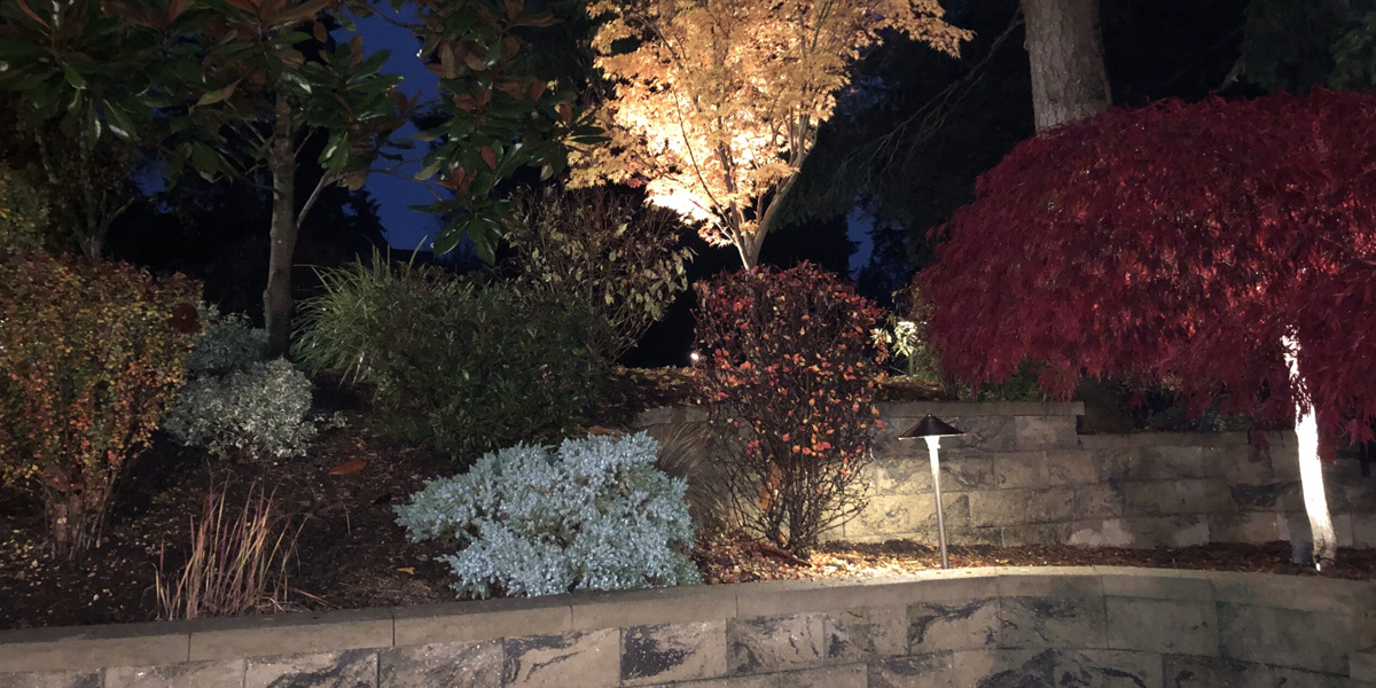
Commercial Low Voltage Lighting Installation in WA: What Property Owners Need to Know
Commercial low voltage lighting installation is one of the highest-return upgrades a commercial property can make to its exterior. The right system extends the usable hours of outdoor spaces, improves security and visibility after dark, and creates a visual presence that distinguishes well-maintained properties from those that go dark at sunset. At Perfect Touch Landscapes, we design and install commercial low voltage lighting installation in WA for commercial properties across Everett and the greater Snohomish County area. This guide covers what the installation process involves, how to evaluate system design quality, and what differentiates a lighting plan that performs long-term from one that looks good at the demo and fades within a season.
What Low Voltage Lighting Systems Include and How They Work
Low voltage landscape lighting systems operate at 12 volts rather than the standard 120-volt line voltage used for most electrical applications. The reduction in voltage makes the systems safer to install around planting and irrigation infrastructure, reduces energy consumption significantly, and allows for more flexible fixture placement without the conduit requirements that line-voltage systems demand.
A complete system includes a transformer that converts standard line voltage to 12 volts, runs of direct burial cable that carry power to fixture zones, and the fixtures themselves, which include pathway lights, uplights, downlights, spotlights, and specialty accent fixtures depending on the design intent.
Modern systems are almost exclusively LED-based. LED low voltage fixtures consume a fraction of the power that halogen fixtures required and last significantly longer, typically 50,000 hours or more under normal operating conditions. For a commercial property with fixtures running six to eight hours per night, that translates to well over a decade of operational life per fixture before replacement is necessary.
Why Design Quality Determines Long-Term Performance
The most common reason commercial low voltage lighting systems underperform or fail prematurely is poor design rather than poor equipment. A system that was not designed with appropriate load calculations, correct cable gauge, and properly spaced transformer taps will develop voltage drop problems within the first year of operation.
Voltage drop is what happens when the cable run from the transformer is too long, the cable gauge is too light, or too many fixtures are loaded onto a single run. Fixtures at the far end of an overloaded run receive less than 12 volts, which causes LED drivers to dim, flicker, or fail early. The fixtures closest to the transformer operate correctly. The rest do not. The result looks like random fixture failure when the actual problem is a systemic design error.
We calculate load and cable runs for every system we design before a single fixture location is confirmed. The design process, not the installation day, is where a commercial lighting system succeeds or fails.
Fixture Types and Where Each One Belongs
A well-designed commercial lighting plan uses different fixture types for different purposes. Mixing them without a deliberate plan produces a system that is technically functional but visually incoherent.
Path lights illuminate walkways and define pedestrian routes after dark. They are typically installed at 18 to 24 inches of height and spaced to provide consistent foot-level illumination without creating bright spots and dark gaps between fixtures.
Uplights placed at the base of trees, architectural elements, or tall plantings create vertical interest by projecting light upward. This technique creates the depth and layering that distinguishes a professional lighting design from a single-row path light installation.
Downlights mounted in trees or on structures simulate the effect of natural moonlight filtered through a canopy. For commercial properties with mature trees, tree-mounted downlights are one of the most effective tools available for creating ambient outdoor illumination without visible fixture placement at ground level.
Spotlights are used for directional accent lighting: illuminating signage, highlighting architectural features, or drawing attention to specific landscape focal points. They require precise aiming to be effective and should be locked in position after the initial installation so they do not drift over time.
| Fixture Type | Best Application | Placement Note |
| Path light | Walkways, driveways, bed borders | Space evenly to avoid alternating bright/dark |
| Uplight | Trees, columns, tall plantings | Aim past canopy base for full spread |
| Downlight | Tree canopy, overhead structures | Mount at 10 to 15 ft for natural spread |
| Spotlight | Signage, architectural focal points | Lock aim after installation |
| Well light | Grade-level accent, step markers | Flush-mount in hardscape or turf edge |
| Deck/step light | Steps, retaining walls, risers | Recess into face for concealed look |
Transformer Sizing and the Mistake Most Installs Get Wrong
The transformer is the most critical component in a low voltage lighting system. Undersizing it is the single most common installation mistake, and it is one that creates problems that are difficult to diagnose after the system is in the ground.
Transformer capacity is rated in watts. The total wattage of all fixtures connected to the transformer must not exceed 80 percent of the transformer’s rated capacity. This 20-percent buffer accounts for future additions, accounts for minor load variation, and prevents the transformer from running at maximum capacity continuously, which shortens its operational life.
For commercial properties where the system is likely to be expanded over time, we typically recommend sizing the transformer at 50 percent of initial load. The upfront cost difference between a 150-watt and a 300-watt transformer is modest. The cost of replacing an undersized transformer and reworking cable runs after the landscape is fully established is considerably higher.
Multi-zone transformers that allow independent timing and control of different system zones are standard for commercial installations. They allow entrance lighting, parking area path lights, and accent zones to operate on different schedules based on property use patterns.
WA Climate Considerations for Outdoor Lighting
Washington State’s wet climate creates specific requirements for low voltage lighting hardware that installation teams working primarily in drier climates sometimes underestimate. Fixture ratings matter here more than in many other markets.
All fixtures installed in the Pacific Northwest should carry an IP65 rating at minimum. IP65 indicates complete protection against dust ingress and protection against water jets from any direction. For fixtures installed in planting beds that receive irrigation, installed at grade level, or mounted on structures in exposed locations, IP67 or IP68 ratings are more appropriate, indicating submersion protection.
Connector quality is equally important. Low-quality wire connectors corrode in consistently wet conditions and create intermittent connection failures that are time-consuming to diagnose and repair. We use waterproof gel-filled connectors on all cable-to-fixture connections for commercial installations in this region.
Transformer placement should also account for seasonal rainfall. Transformers mounted at fence post or wall locations where rain drip or splash is consistent need weatherproof enclosures. A transformer spec’d for the load but exposed to standing moisture at the mounting point is a maintenance problem waiting to happen.
Controls, Timers, and Smart Integration Options
Modern commercial low voltage transformers include programmable timer and photocell controls that allow precise scheduling of system operation. Photocell control turns the system on at dusk and off at dawn automatically, accounting for the significant variation in darkness onset that western Washington experiences between December and June.
For commercial properties that want more precise control, Wi-Fi-enabled transformers allow remote schedule adjustment, zone-by-zone control, and fault notification from a smartphone or property management system. These systems are increasingly standard for commercial accounts where lighting is a visible tenant or customer experience element.
Zone separation through multiple transformer taps or separate transformers allows entrances, parking areas, and accent lighting to be operated on independent schedules. Entrance lighting may run from dusk until midnight. Security lighting may run all night. Accent lighting may follow evening business hours only. This flexibility is only achievable when the system was designed with zone independence from the start.
Frequently Asked Questions
- How much does commercial low voltage lighting installation typically cost?
Commercial system cost depends on fixture count, cable run distance, transformer capacity, and the complexity of the design. We provide site-specific proposals after an initial assessment. Systems are priced as complete installations including materials, labor, and programming, not as fixture-only supply arrangements.
- How long does commercial low voltage lighting installation take?
A standard commercial installation for a property with 20 to 40 fixtures typically takes one to two days for an experienced crew. Larger systems, properties with complex hardscape routing, or projects requiring trenching for main cable runs take longer and are scoped individually based on site conditions.
- Do LED low voltage fixtures require maintenance?
LED fixtures have very long operational lives, but commercial systems benefit from an annual inspection that checks aiming, cleans lens surfaces, confirms connector integrity, and verifies transformer programming. Landscape growth can shift uplights off their intended targets and overgrown plantings can block path lights within a single season.
- Can existing halogen low voltage systems be converted to LED?
Yes, in most cases. LED retrofit lamps are available for common fixture housings, and full fixture replacement is straightforward when the existing cable infrastructure is in good condition. Conversion typically reduces system wattage significantly, which may allow additional fixtures to be added within the existing transformer capacity.
- What permits are required for commercial low voltage lighting in WA?
Low voltage landscape lighting systems typically do not require an electrical permit in Washington State because they operate below 50 volts. However, the transformer itself connects to line voltage and must be installed by a licensed electrician or in compliance with NEC low-voltage provisions. We confirm permit requirements for each commercial project during the planning phase.
Lighting Is the Detail That Changes How a Property Reads After Dark
A commercial property that presents well after dark is a different asset than one that goes dark at sunset. The visual presence, the security signals, the sense of management and care that a well-lit exterior communicates, all of these translate to how tenants, clients, and visitors perceive the property during the hours when outdoor lighting is the only impression being made.
At Perfect Touch Landscapes, we design and install commercial low voltage lighting systems that are built for long-term performance in Washington’s climate and sized correctly from the start to accommodate the property’s needs over time. The design process is where these systems succeed or fail, and it is where we invest the most attention before any fixture goes in the ground.