Fencing and Irrigation Installation in Everett: What Commercial Properties Need to Get Right
Fencing installation services in Everett and irrigation systems address two of the most foundational elements of a commercial landscape: defining the property and sustaining it. Both are long-term investments that affect how a property functions, how it looks, and how much ongoing maintenance it requires.
At Perfect Touch Landscapes, we install fencing and irrigation systems for commercial properties throughout Everett and Snohomish County. The decisions made during planning and installation determine the performance of both systems for years. Getting these fundamentals right from the start is far more cost-effective than correcting them later.
This guide covers the key considerations, material comparisons, and process details that help commercial property managers make informed decisions before installation begins.
Choosing the Right Fencing Material for Commercial Use
Commercial fencing serves purposes that residential fencing rarely has to balance simultaneously: security, boundary definition, aesthetic alignment with the property, and durability under heavier use conditions. The material selected determines how well a fence performs across all four.
Chain link remains the most cost-effective option for securing large perimeters where appearance is secondary. It is low maintenance, widely available, and holds up well in wet Pacific Northwest conditions without the corrosion risk that untreated steel faces. Vinyl-coated options improve the visual profile without significantly increasing cost.
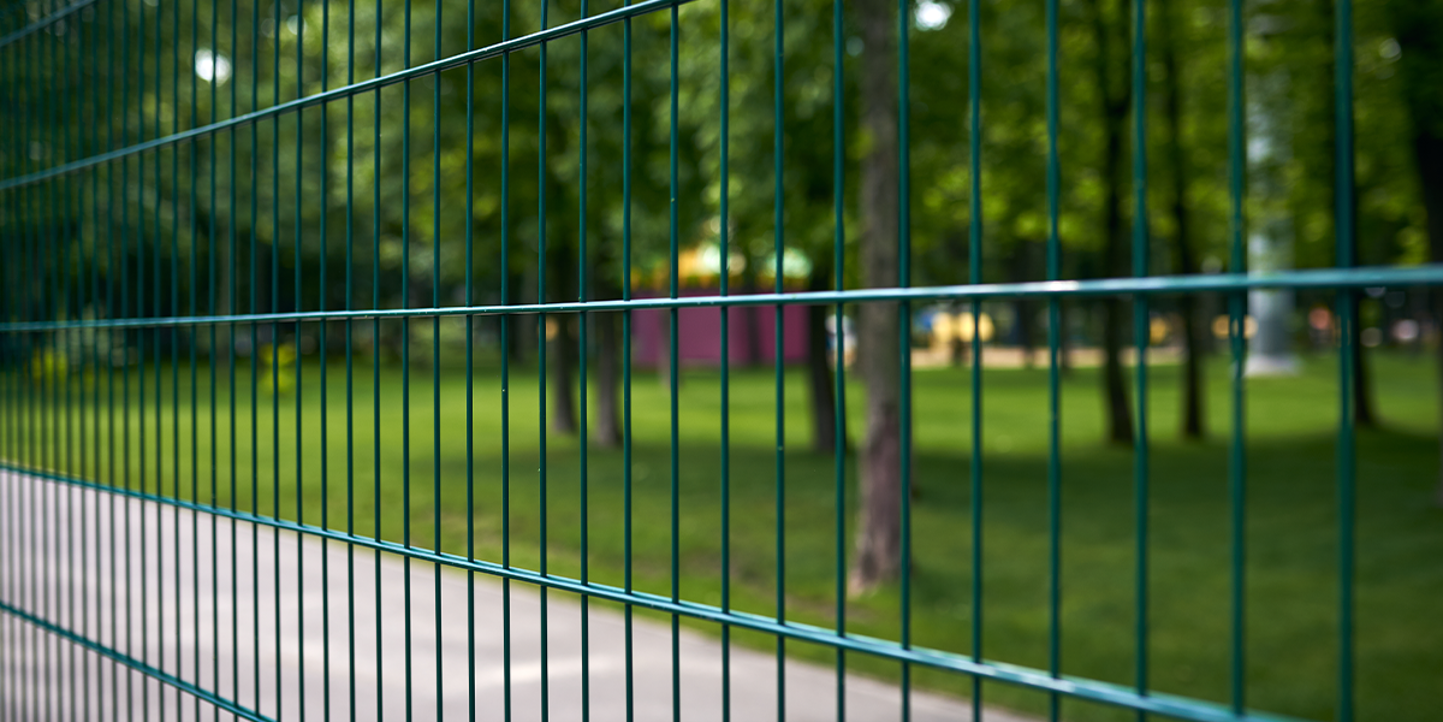
Ornamental steel and aluminum are common choices for front-facing commercial applications where the fence is as much about defining the property aesthetic as it is about access control. Both materials are durable in Everett’s climate, though aluminum has an advantage in high-moisture zones due to its natural corrosion resistance.
Cedar and composite wood fencing work well for commercial properties seeking a warmer visual character, particularly mixed-use developments or properties adjacent to residential zones. Cedar is native to the Pacific Northwest and performs well here, but it does require periodic sealing to maintain appearance and prevent weathering.
| Material | Durability | Maintenance | Aesthetics | Cost Range |
| Chain Link | High | Low | Utilitarian | Low |
| Vinyl-coated Chain Link | High | Low | Moderate | Low-Mid |
| Ornamental Steel | Very High | Low-Mod | Strong | Mid-High |
| Aluminum | High | Low | Strong | Mid |
| Cedar Wood | Moderate | Moderate | Warm / Natural | Mid |
| Composite Wood | High | Low | Natural-Look | Mid-High |
Permitting, Setbacks, and What Everett Code Requires
Commercial fencing in Everett is subject to zoning requirements that vary by property type, location, and fence height. Fences exceeding six feet typically require a building permit. Properties in commercial zones adjacent to rights-of-way or neighboring residential parcels face specific setback restrictions that determine how close the fence can be placed to the property line.
We pull permits and handle the submission process for all commercial fencing projects we install. Property managers should not have to navigate municipal code research before a fence goes in. Our team confirms setback requirements, fence height limits, and any design restrictions tied to the zoning classification before the first post is set.
Utility locating is also a required step before any post installation. Everett has buried utilities throughout commercial zones, and failing to complete a locate request before digging creates liability risk and potential service interruptions. We coordinate this as part of every installation.
How Irrigation System Design Affects Long-Term Landscape Performance
An irrigation system is not just a watering mechanism. It is infrastructure that determines whether a landscape investment pays off over time. A poorly designed system creates dry zones, overwatered beds, runoff onto hardscape, and higher water bills without improving turf or plant health.
Irrigation installation services in Everett need to account for the specific moisture patterns of western Washington. The city receives significant natural rainfall from October through May, which means a commercial irrigation system should not be running on the same schedule in April that it follows in August. Smart controller systems that adjust output based on weather data eliminate this problem, and they typically deliver water savings of 20 to 30 percent compared to fixed-schedule systems.
Soil type also shapes system design. Clay soils common in much of the Snohomish County area absorb water more slowly than sandy or loam soils. Sprinkler heads that deliver more water per minute than the soil can absorb create puddles and runoff without actually irrigating the root zone more effectively. Matching application rate to soil infiltration rate is a design step that most systems skip, and it shows in how the landscape performs in summer.
Sprinkler vs. Drip Irrigation: Matching the System to the Application
Commercial irrigation systems are not one-size-fits-all. Turf areas and flower beds have fundamentally different water requirements, and the delivery method that works for one is often wrong for the other.
Rotary and fixed spray sprinkler heads are the right choice for turf areas. They cover large zones efficiently and can be zoned to match turf shapes precisely. The design concern with sprinkler systems is overlap coverage and head-to-head spacing. Zones with inadequate coverage create dry patches that show up mid-summer when soil moisture reserves run out.
Drip irrigation is more appropriate for planted beds, shrub masses, and seasonal color zones. It delivers water directly to the root zone, reduces evaporative loss, and avoids wetting foliage in ways that can promote disease in dense plantings. Drip systems also significantly reduce water waste in sloped planting areas where sprinkler runoff is a recurring problem.
- Turf areas: Rotary or fixed spray heads with head-to-head coverage
- Annual and perennial beds: Drip emitters at or near root zone
- Mixed shrub plantings: Low-volume rotary or drip depending on density
- Slopes and hillside beds: Drip only to prevent runoff and erosion
- High-visibility containers: Individual emitters with pressure-compensating heads
Integrating Fencing and Irrigation into a Unified Landscape Plan
Properties that plan fencing and irrigation independently often create conflicts that are expensive to resolve after installation. Fence posts in the wrong location block irrigation coverage or require system rerouting. Irrigation lines running under future fence lines create access and repair complications when the fence eventually needs a post replacement.
We coordinate fencing and irrigation installation sequences on commercial projects where both are being deployed in the same zone. The typical sequence places irrigation infrastructure first, then fence post installation works around confirmed line locations. This eliminates the retrofit problem and produces a cleaner final layout.
What the Installation Process Looks Like on a Commercial Site
Commercial fencing and irrigation installations follow a structured process that minimizes disruption to ongoing property operations. Our pre-installation site walk confirms measurements, identifies obstacles, reviews access points, and establishes a sequencing plan before any equipment arrives.
Fencing installation on commercial sites typically follows this sequence:
- Utility locate confirmation and marking
- Layout staking and owner confirmation of line placement
- Post hole drilling or driving based on soil conditions and fence type
- Post setting with concrete footing for permanent installations
- Rail and panel installation with hardware specification matched to material type
- Gate installation and hardware alignment testing
- Final inspection and cleanup
Irrigation installation follows a similar structured approach, with pressure testing before backfill and controller programming completed before the crew leaves the site.
Frequently Asked Questions
How long does commercial fencing installation take?
Timeline depends on linear footage, material type, and site conditions. A standard commercial perimeter fence of 300 to 500 linear feet typically takes two to four days for a professional crew. Projects with complex grading, gates, or access control integration take longer and are scoped individually.
Do you install irrigation systems for properties that already have landscaping?
Yes. Retrofit irrigation installation works around existing plantings, root systems, and hardscape. We plan head placement and line routing to avoid root damage and minimize surface disruption. Existing landscapes benefit as much from a properly designed system as new installations do.
What type of irrigation controller do you recommend for commercial properties?
We typically recommend weather-based smart controllers for commercial properties. They adjust run times based on real-time weather data, reduce water waste, and can be monitored and adjusted remotely. Most qualify for water utility rebates in the Snohomish County service area.
How do you handle fencing on slopes or uneven terrain?
Sloped terrain is handled through either racked fencing, where panels follow the slope angle, or stepped installation where panels are set level in increments. Material type and slope degree determine the best approach. We assess grading during the initial site walk and recommend the method that produces the best visual outcome.
Can irrigation and fencing be installed simultaneously to reduce disruption?
In most cases, we sequence irrigation first, then fencing, to avoid conflicts between post placement and buried line locations. Both can often be completed within the same site mobilization to minimize disruption to property operations and reduce the total installation timeline.
Getting the Foundation Right from the Start
Fencing and irrigation are infrastructure decisions. Unlike plantings or mulch, they are difficult and expensive to redo once they are in the ground. The value of professional installation is not just labor. It is the planning, permitting, and sequencing expertise that prevents the problems other approaches create.
At Perfect Touch Landscapes, we install commercial fencing and irrigation systems that are designed to perform well beyond the first season. If your property is planning either upgrade, the right time to get the design and permitting process started is before the installation window, not during it.