The Irrigation System That Spent All Summer Watering the Wrong Things
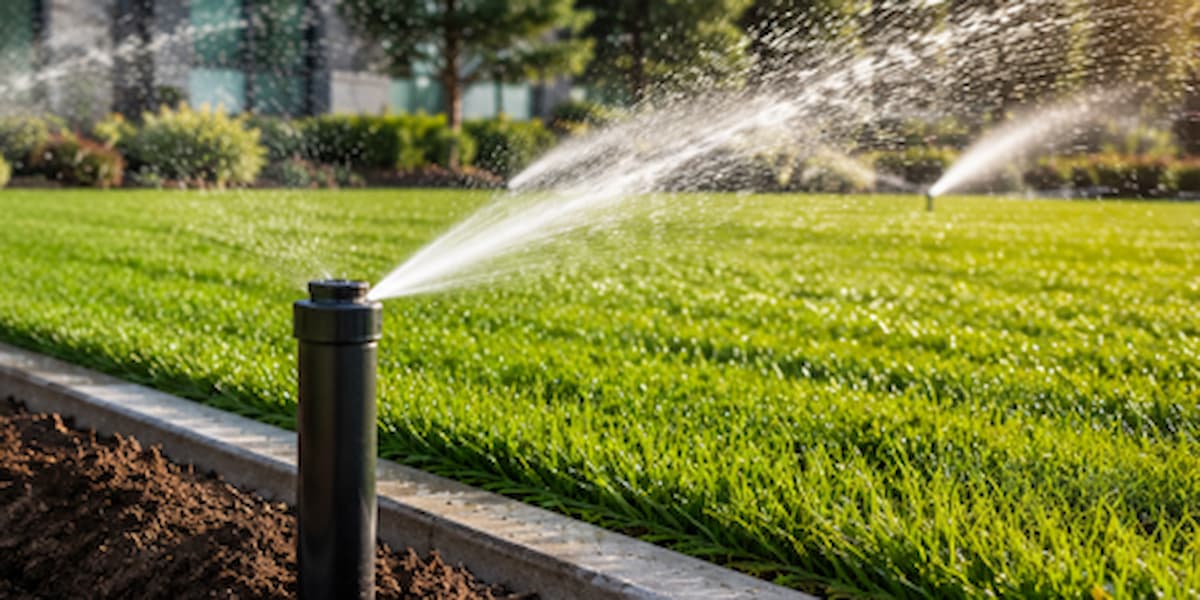
Commercial irrigation systems have a talent for quiet misdirection. They run on schedule, consume water at the agreed-upon rate, and produce turf results that are technically explainable by everything except the system itself. The dry patches appear. The hardscape edges develop that particular shine that comes from consistent moisture. The water bill arrives at a figure that suggests the landscape is thriving. The landscape, for its part, has a different opinion. At Perfect Touch Landscapes, our team handles commercial irrigation and sprinkler repairs in Everett that address not just the broken components but the accumulated drift of a system that has been doing the wrong things correctly for longer than anyone noticed.
How Irrigation Systems Drift Without Breaking
The irrigation system failure mode that produces the most sustained damage is not the dramatic one. Burst pipes and failed controllers announce themselves. The quiet failures, the ones that compound across seasons, are subtler.
A spray head rotates two degrees off its intended arc after a winter frost cycle. The adjustment is imperceptible from the controller box. From the dry patch that appears in August at the edge of its coverage zone, it is rather obvious in retrospect. A nozzle wears at the orifice over three seasons of daily operation and begins delivering water at a radius four feet shorter than specified. The zone technically runs. The far end of the zone technically does not receive water. The zone’s run time gets extended to compensate, which overwatered the near end while continuing to underwater the far end, which is a creative solution to the wrong problem.
These are not equipment failures. They are calibration failures. The distinction matters because calibration failures require assessment, not just replacement.
The Evidence Summer Leaves Behind
End of season is the most legible moment in a commercial irrigation system’s annual story. The evidence of what worked and what did not is written across the turf in a language that is straightforward to read once someone is looking at it with appropriate attention.
Dry patches in the same location every summer are coverage gaps. They do not improve with longer run times. They require head repositioning or zone redesign. Wet borders along hardscape edges are overspray from heads whose aim shifted or whose throw radius was never correctly matched to the zone geometry. Turf that greened unevenly through summer, dense near the heads and thin at the perimeter, is a pressure problem: the far ends of the zone are receiving less than the design pressure and throwing short.
Water bills that run above what the irrigated area should require are the system’s summary statement. They indicate that water is being applied somewhere other than where it was intended. The somewhere is usually the sidewalk.
What the Repair Assessment Actually Finds
Our commercial irrigation and sprinkler repair services begin with a full zone-by-zone assessment run conducted while a technician walks the property. This is not a paperwork exercise. It is a live observation of what each zone is actually doing versus what it is supposed to be doing, and the gap between those two things is frequently instructive.
The most common findings fall into patterns that are recognisable across commercial properties throughout Snohomish County.
| Finding | Root Cause | Correct Response |
| Rotary head covering hardscape | Aim drift from frost heave or equipment contact | Realign, lock, verify arc |
| Short throw on zone perimeter | Pressure drop from zone overload or pipe restriction | Pressure test, zone rebalancing |
| Pooling at head location | Cracked body or worn seal | Head replacement |
| Zone slow to pressurize | Valve diaphragm wear | Diaphragm or full valve replacement |
| Uneven green-up across zone | Mixed nozzle sizes from inconsistent prior repairs | Standardise nozzle specification across zone |
| Sinkholes near lateral run | Cracked pipe losing water subsurface | Excavation and pipe repair |
Common Failures and What Causes Them
Valve failures are the component most likely to produce intermittent rather than complete failure, which makes them the most frustrating to diagnose without direct observation. A valve that opens slowly causes the zone to run at reduced pressure for the first two minutes of each cycle. Over a season, that translates to a consistent band of under-irrigated turf at the far end of the zone that looks exactly like a coverage gap and responds to every treatment except the correct one.
Backflow preventer condition is the assessment item most commonly deferred and most consequential when deferred too long. A backflow preventer approaching the end of its service life passes inspection until the day it does not, at which point it typically fails at the check valve in a way that contaminates the downstream supply line and requires both component replacement and line flushing. Catching wear before failure is straightforward. Catching it after is not.
Controller programming errors are not failures in the mechanical sense but produce failure-equivalent results. A schedule that was set in May and not reviewed through a dry August has been running the wrong program for three months. Smart ET controllers eliminate this category of problem by adjusting automatically to real evapotranspiration data. Fixed-schedule controllers require someone to adjust them, which requires someone to notice that they need adjusting, which requires a level of attention that most commercial properties do not formally assign to anyone.
Why September Is the Correct Month for This Conversation
Commercial irrigation and sprinkler repairs in Everett scheduled in September occupy a different position in the maintenance calendar than the same repairs scheduled in April. In September, the season’s evidence is fresh, crew availability is uncontested, and the system can be assessed, repaired, and winterized as a connected workflow before the first freeze creates urgency out of what was a planning decision.
In April, the same repairs are competing with installation season demand across Snohomish County. Parts that ship in three days in September sometimes take two weeks in April. The repair that would have cost a standard service call in fall becomes an emergency call in spring when the system fails at startup and the first irrigation cycle of the year deposits water on the parking lot instead of the turf.
The system does not improve over winter. Whatever was drifting in September is still drifting in March, plus whatever freeze damage accumulated in the interim. September is not early. September is correct.
What Our Service Includes
At Perfect Touch Landscapes, our end-of-season commercial irrigation assessment and repair service covers the full system, not a subset of visible problems.
- Zone-by-zone assessment run with live coverage observation
- Head aim verification and adjustment across all zones
- Nozzle inspection and replacement where wear has affected throw pattern or radius
- Valve function test including response time, pressure delivery, and solenoid draw
- Backflow preventer inspection with condition documentation and photograph
- Controller programming review and seasonal schedule correction
- Written assessment report with repairs completed and items flagged for spring
- Winterization coordination scheduled within the same service window
The written report is not a courtesy. It is the document that makes spring startup faster and less expensive by beginning the season with a known system state rather than an unknown one.
Frequently Asked Questions
1. How do I know if my commercial irrigation system needs repairs or a full redesign?
A system with isolated component failures, a cracked head, a failed valve, a damaged lateral line, is a repair candidate. A system with multiple dry zones, widespread pressure inconsistency, and coverage patterns that no longer match the current landscape configuration is a redesign candidate. The assessment visit makes this determination and provides a clear recommendation before any work is authorised.
2. Can repairs be completed before winterization in the same service visit?
Minor repairs, head replacements, nozzle swaps, aim adjustments, and solenoid replacements are frequently completed during the assessment visit. More involved work, lateral line repairs and valve replacements requiring excavation or parts sourcing, is scheduled as a follow-up before winterization. We confirm scope and timeline during the initial assessment so there are no surprises.
3. What does a commercial irrigation assessment cost?
Assessment and repair pricing depends on system size, zone count, and the scope of repairs identified. We provide a written estimate after the assessment visit before any repair work proceeds. Properties under annual service agreements receive assessment visits as part of their contracted scope.
4. Do you service systems installed by other contractors?
Yes. We assess and repair commercial irrigation systems regardless of original installer. The assessment documents the system configuration, which also creates a baseline record that makes all future service more efficient. We work with all major commercial irrigation components and controller systems.
5. What is included in the written report after assessment?
The report documents the condition of each zone, repairs completed during the visit, components flagged for replacement, controller programming adjustments made, and backflow preventer condition. It is written to be useful to the property manager and to the spring startup crew, not as internal documentation only.
The System Spent All Summer Telling You What It Needed
The dry patches, the overwatered edges, the water bill that does not quite match the landscape it was supposed to produce: these are not mysteries. They are a readable account of a system that has been operating outside its design parameters for longer than anyone formally acknowledged.
Perfect Touch Landscapes provides commercial irrigation and sprinkler repair services that address the system as a whole rather than replacing the most recently failed component and moving on. If your property is ready to schedule commercial irrigation and sprinkler repairs in Everett before the winterization window closes, September is the month to do it. The system has been waiting.