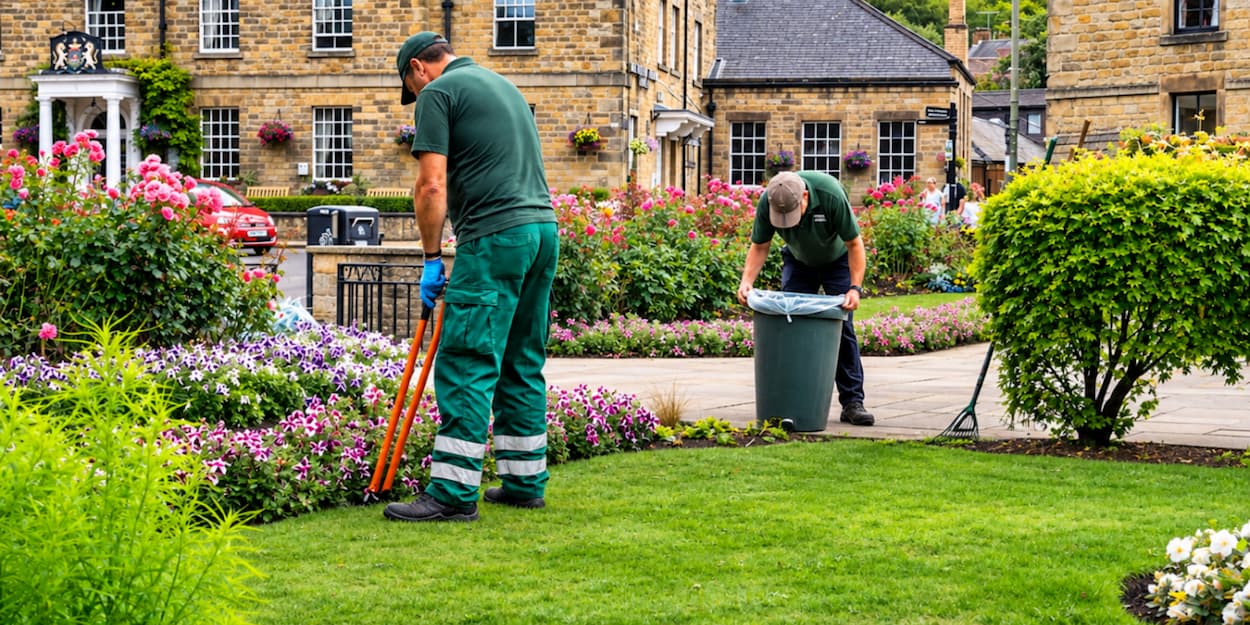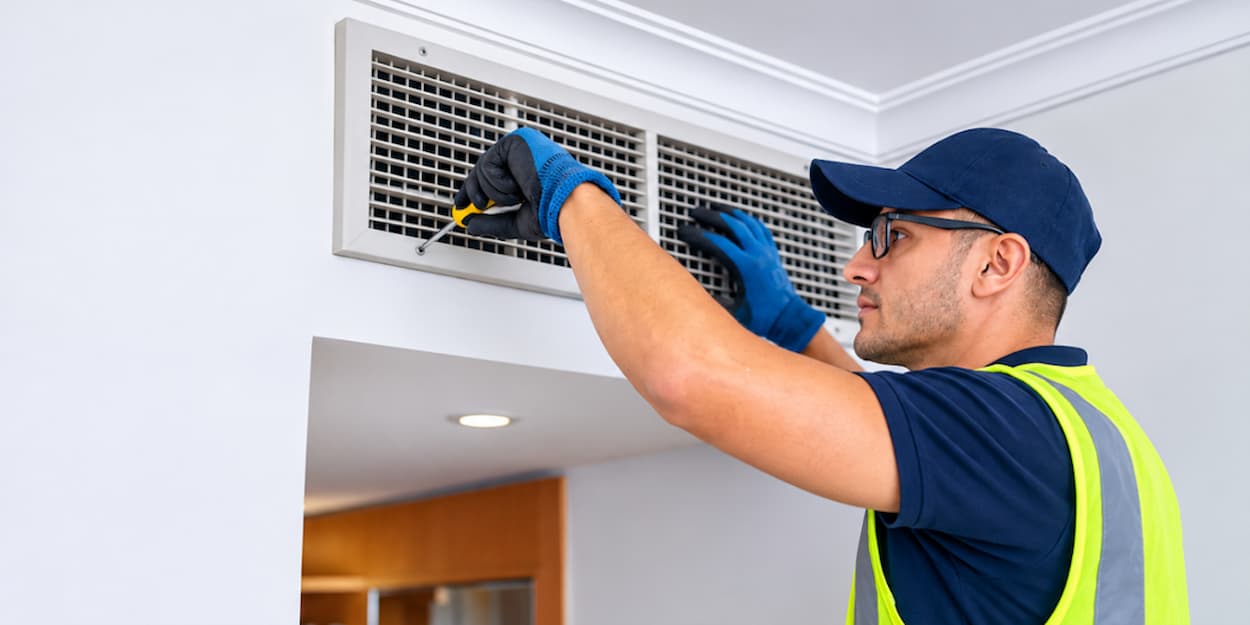
Hiring an Apartment Maintenance Contractor in Everett: What the Best Property Managers Prioritize
An apartment maintenance contractor in Everett who understands Snohomish County’s soil conditions, winter precipitation patterns, and seasonal service windows delivers fundamentally different results from one applying a generic multi-family maintenance template. The geology here is specific, and so are the failure modes it produces.
Everett sits on glacial till — compacted clay, silt, and gravel deposited at the edge of the last Puget Lobe advance. This substrate drains slowly, accumulates moisture laterally, and produces the drainage, irrigation, and hardscape problems that make up a predictable share of every apartment complex’s maintenance calendar.
Perfect Touch Landscapes provides apartment maintenance services across Everett’s multi-family properties. This guide covers what an experienced maintenance contractor should do before winter arrives, and what separates a program that holds up from one that accumulates deferred remediation costs.
Understanding Everett’s Geology and What It Means for Apartment Grounds
The glacial till that underlies most of Everett’s developed land has three relevant characteristics for apartment maintenance contractors.
First, it compacts under traffic and load. Lawn areas adjacent to parking, foot paths across grass between buildings, and the soil around high-use entry areas compact faster than the surrounding grade. Compaction reduces infiltration, which increases surface water accumulation, which increases drainage maintenance frequency.
Second, it drains laterally before it drains vertically. Water in Everett’s clay-dominant soil moves sideways along the surface of the clay layer, which means a drainage problem at one end of a complex may originate from a grade or installation issue at the other end. Treating the symptom without understanding the lateral drainage pattern produces recurring remediation.
Third, freeze-thaw cycles in the clay layer displace hardscape. Concrete walkways, pavers, and curb sections in Everett move more than they would on sandy, freely draining soil because the clay holds moisture that expands when it freezes. Hardscape inspection and resetting is a predictable annual maintenance category, not an exceptional one.
Irrigation Winterization: Timing, CFM, and What Gets Skipped
Apartment complex irrigation systems are more complex than residential systems, and their winterization requirements are correspondingly more demanding. A system serving multiple buildings, with varied pipe diameters, backflow prevention assemblies, and zone sequencing, requires a contractor with compressor capacity appropriate to the system’s cubic-feet-per-minute demand.
Undersized compressors are the most common source of incomplete winterization. A contractor who blows out a large zone system with a consumer-grade compressor may clear water from the lateral supply lines while leaving residual water in the heads and lower-pressure zones. That water freezes, and the heads or fittings it occupies fail before spring startup.
Timing matters as much as equipment. In Everett, the first hard freeze risk arrives in November. Winterization completed in mid-October provides a reasonable margin. Winterization scheduled for late November is gambling on a mild first three weeks of the month, which the climate does not reliably provide.
Perfect Touch Landscapes winterizes apartment complex irrigation systems with correctly sized compressors, zone-by-zone documentation, and backflow assembly inspection included in the service visit. We schedule in October, not November.
Drainage: Why Apartment Complexes Accumulate Problems Faster
Multi-family properties accumulate drainage problems faster than single-family properties for structural reasons. Higher impervious surface coverage from parking and walkways increases runoff volume. Shared drainage infrastructure means a single failing catch basin or silted French drain affects multiple buildings. And the high pedestrian and vehicle traffic across landscaped areas accelerates soil compaction, further reducing infiltration.
Fall is the right season for drainage assessment on Everett apartment complexes because the wet season begins in October. A drainage inspection in September, before the first sustained rainfall, reveals the system’s actual capacity before it is tested by the year’s first real precipitation load.
Common drainage failures on Everett multi-family properties: catch basin sumps silted past functional depth, French drain inlets blocked by root intrusion or sediment, downspout extensions directing roof runoff toward building foundations, and grade settlement creating new low points in walkways that direct water toward unit entries.
Each of these is addressable if identified before the wet season begins. Each becomes more expensive and more disruptive to residents if identified in November under active rainfall.
Leaf Management and Fall Cleanup on a Resident Schedule
Apartment complex leaf management is a scheduling problem as much as a labor problem. Big-leaf maples, the dominant canopy species across most of Everett’s residential neighborhoods, drop their leaves over a compressed three-to-four-week window in late October and early November. That window coincides with wet conditions that mat leaves onto walkways and drain covers.
Matted leaves on walkways are a slip hazard. Matted leaves on drain covers are a drainage hazard. Both create liability exposure for the property management organization.
Scheduling leaf management on an apartment complex requires coordination with resident parking schedules: crews cannot clear parking lot leaf accumulation if resident vehicles are occupying the spaces. A maintenance contractor who has not thought through this logistics problem in advance will either deliver incomplete service or disrupt residents with ad hoc requests to move vehicles.
Perfect Touch Landscapes coordinates apartment complex fall cleanup around resident schedule patterns, with service windows timed to minimize disruption and maximize the coverage area accessible during each visit.
Hardscape, Lighting, and Liability in Common Areas
The common areas of an Everett apartment complex represent the highest liability exposure on the property. Entry walkways, stairwells, parking lot curb transitions, and mailbox areas see the highest pedestrian traffic and are the most likely locations for a premises liability claim. Apartment maintenance services in Everett should include regular hardscape assessment with documentation of identified hazards and completed repairs.
Hardscape settlement on Everett clay soils produces raised pavement sections, cracked concrete at control joints, and settled pavers at entry sequences. These are foreseeable and preventable through seasonal inspection and minor resetting before the displacement becomes a tripping hazard.
Exterior lighting in common areas is a maintenance category that is consistently deferred until a complaint or incident forces it. Parking lot fixtures, stairwell lighting, and walkway bollards that are not inspected on a regular cycle fail incrementally until a resident documents a safety concern or an incident occurs.
A comprehensive apartment maintenance program includes exterior lighting inspection and repair on a defined schedule, not just replacement when a resident reports a failed fixture.
Coordinating Maintenance Around Resident Life
The operational constraint that separates apartment complex maintenance from other commercial maintenance is the presence of residents around the clock. Maintenance activities that would be executed without coordination at an office park require scheduling awareness at a residential property.
Leaf blowing at 7:00 AM on a Saturday, compressor work during quiet hours, herbicide applications without advance notice to residents with children or pets: each of these is a recoverable problem the first time and a formal complaint the second. A maintenance contractor without experience in multi-family environments will produce these problems, because they are not intuitive to contractors who primarily service commercial properties with standard business-hours access.
Perfect Touch Landscapes coordinates all apartment complex maintenance work with property management teams before scheduling. We post advance notice for chemical applications, schedule disruptive work during resident low-activity windows, and maintain communication with on-site management throughout the service visit.
Frequently Asked Questions
What is the difference between a commercial landscaping contractor and an apartment maintenance contractor?
An apartment maintenance contractor services the full grounds program for multi-family residential properties: irrigation, drainage, hardscape, lighting, leaf management, snow and ice, and turf and planting bed maintenance. A commercial landscaping contractor typically focuses on installation and maintenance of plant material and turf. Multi-family properties require the broader scope, particularly for winter season services.
When should we schedule irrigation winterization for our Everett apartment complex?
Mid-October. Snohomish County’s first hard freeze risk begins in early November; winterization in mid-October provides an appropriate margin. Systems winterized in late November are regularly caught by early freezes. We schedule proactively and confirm the appointment before the window closes.
Do you handle drainage repairs, or just routine maintenance?
We handle both. Routine drainage maintenance includes catch basin cleaning, French drain inlet clearance, and grade monitoring. Drainage repairs include pipe repair or replacement, basin rebuilding, and new drain installation where the existing system is inadequate for the property’s runoff load.
How do you handle advance notice for chemical applications at apartment complexes?
We provide advance notice to property management for all chemical applications, with enough lead time for management to post resident notices as required by the property’s lease terms or local posting requirements. We do not apply herbicides, pesticides, or fertilizers without confirming notice has been posted.
Can you coordinate with our on-site management team and not just the property management office?
Yes. We work directly with on-site managers and maintenance staff at properties where those relationships are established. We provide service schedules in advance, communicate during visits, and log completed work in whatever format the management team uses to track maintenance activity.
The Right Contractor Knows This Ground
Everett’s clay soils, wet winters, and multi-building residential properties produce maintenance challenges that a contractor without local experience will spend your first season learning. An apartment maintenance contractor in Everett from Perfect Touch Landscapes brings that knowledge already in place: the drainage patterns, the irrigation timing, the hardscape failure modes, and the resident coordination logistics that make winter season management run without incident. Contact us in September. The work that matters most happens before October.