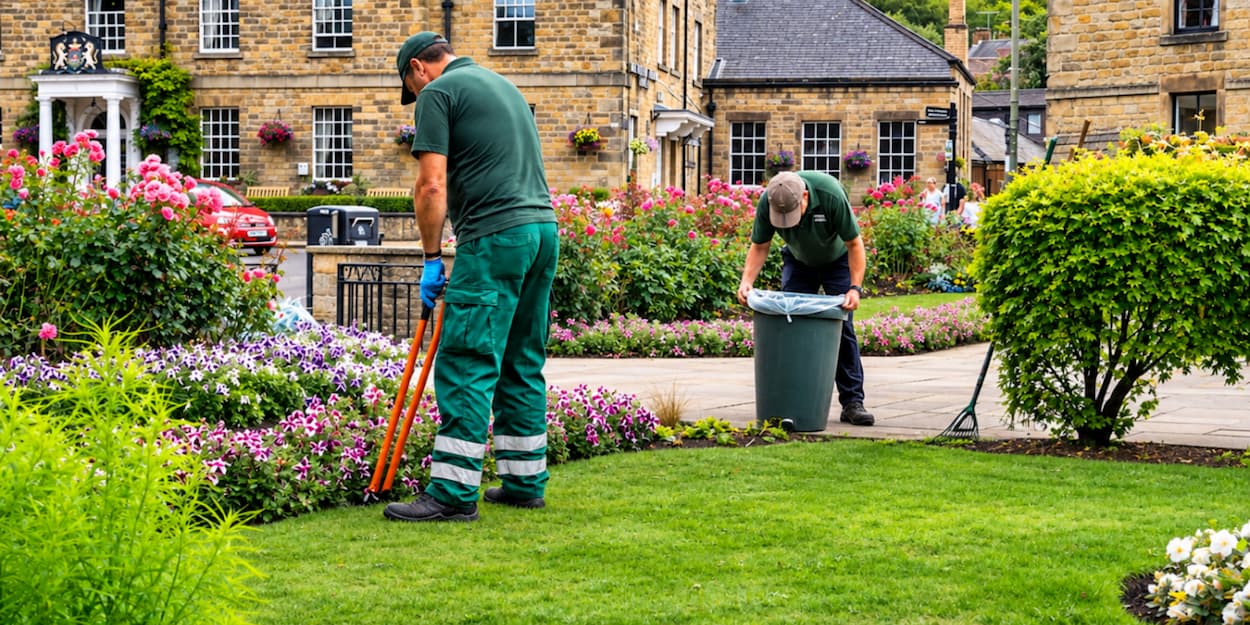
What Makes a Landscaping Company in Everett Worth Trusting With Your Property
A landscaping company in Everett earns trust by demonstrating knowledge of the specific conditions that make western Washington properties different: clay-heavy glacial soils, a wet-dry climate cycle unlike most of the continental United States, and a native plant community shaped by thousands of years of calibration to exactly these conditions.
At Perfect Touch Landscapes, we treat every property as a specific place with its own drainage patterns, light qualities, and soil memory. That reading comes before any prescription.
Properties managed with site-specific knowledge hold their condition and improve over time. Properties managed with generic practices accumulate the cost of those generic decisions across every growing season.
What the Land Around Everett Requires from a Landscape Company
Western Washington’s landscape operates on a climate logic distinct from most of the continental United States. The wet season runs October through June. The dry season spans July and August with a September extension in good years.
The soil is predominantly clay-based glacial till: it absorbs moisture slowly in winter and holds heat slowly in spring. A landscape program that ignores this produces results that look acceptable in June and reveal their inattention by August.
Turf seeded without accounting for summer moisture stress. Drainage acceptable through spring that becomes a pond by November. Irrigation running a fixed schedule regardless of what July is actually doing to the soil. Each of these is a predictable consequence of generic practice applied to a specific place.
The Pacific Northwest’s native plant community, Douglas fir, western red cedar, big-leaf maple, red alder, emerged in response to exactly these conditions over millennia of calibration. A landscape program that acknowledges that history plants for what the land actually wants to support. The results persist and compound over time rather than requiring constant intervention to hold their shape.
The Difference Between Maintenance and Genuine Care
Maintenance and care are not the same thing, though they are frequently sold as if they were.
Maintenance executes a recurring task list: mow, edge, blow, depart. It keeps a property from visibly deteriorating. It is valuable in the sense that its absence would be noticed immediately and its presence is not noticed at all, which is the least impressive form of success available in this industry.
Care is maintenance plus observation. The crew lead who notices the turf on the northwest corner thinning for three weeks and mentions it before it becomes a replacement project. Irrigation calibration that changes when the weather changes rather than running the same July program in October. The bed that gets extra mulch in November because the plants are marginally cold-sensitive and the crew knows it.
The difference between these approaches is visible in a property over one full growing cycle. It is dramatic over three. At Perfect Touch Landscapes, our crews are trained to observe, not just to execute. Every visit generates notes, not just a completed task list.
What a Knowledgeable Landscape Contractor Does Differently
Choosing a landscape contractor in Everett, WA involves evaluating something not immediately visible in a bid document: whether the company’s knowledge of local conditions translates into better decisions on the ground, or whether local knowledge is a marketing phrase attached to generic practices.
The evidence of genuine local knowledge shows up in specific places. A contractor who specifies the correct grass cultivars for Snohomish County’s wet-dry cycle rather than a generic Pacific Northwest seed blend is demonstrating something real. One who times fall fertilization to soil temperature rather than calendar date is demonstrating something real.
A contractor who designs drainage solutions for a site’s specific clay content and slope, rather than recommending the same French drain configuration for every drainage complaint, is demonstrating something real.
None of these decisions are visible in a walk-through or a proposal. They become visible in the second and third year of a maintenance relationship, when the properties managed with genuine knowledge hold their condition and the ones managed with generic practices begin showing the accumulated cost.
Commercial and Residential: Different Scales, Same Principles
The principles that produce excellent residential landscaping and excellent commercial landscaping are the same: site-specific assessment, correct plant and material selection, timing calibrated to the Pacific Northwest climate, and consistent attentive maintenance over time.
The scale differs, and with it the logistical complexity. A commercial property with multiple buildings, high pedestrian traffic, parking lot landscape islands, and a complex irrigation system requires coordination across zones and crews that a residential property does not.
The stakes of maintenance failures are also different. A struggling turf zone at a commercial property affects the impression of tenants, clients, and prospective occupants, not just the satisfaction of a homeowner.
Perfect Touch Landscapes serves both commercial and residential clients across Everett and the broader Snohomish County corridor. We maintain the same standards of observation and site-specific attention regardless of scale, because the land does not adjust its requirements based on property type.
Reading a Landscape Before Prescribing Anything
The first thing we do with any new property is read it.
Reading a landscape means walking the full site with attention to drainage flow patterns, sun and shade distribution across different times of day, soil condition in multiple zones, existing plant health and species identification, irrigation coverage gaps, and the history of the site as written in what is currently growing, thriving, struggling, or absent.
A maintenance program designed without this reading is a template applied to a property that may not fit the template. A landscape installation designed without it is an aesthetic exercise that may or may not survive the site’s actual conditions.
The reading takes an hour on a modest residential property and longer on a commercial site with multiple zones. It is always worthwhile, because the conditions it reveals are the conditions that determine whether the work holds up over time.
Seasonal Attentiveness Across the Full Pacific Northwest Year
Spring in Everett is a rapid transition. Soil temperatures climb from the winter low, dormant turf greens up over weeks, early-season weeds establish in the gaps before the lawn canopy closes over them, and the irrigation system comes back online needing recalibration for spring moisture conditions rather than the August program it was running when winterized.
Summer is the dry stress season. July and August deliver almost no precipitation to soils also releasing moisture faster under longer, warmer days. Irrigation management during this period is the difference between turf that holds its density and turf that thins in the same zones every summer and eventually requires renovation.
Fall is the preparation season. The work done between September and November determines the condition of the property in March. Leaf removal, drainage clearance, irrigation winterization, fall fertilization, and bed preparation are not administrative tasks to be scheduled when convenient. They are time-sensitive interventions with windows that close on the season’s schedule, not ours.
Winter in Everett is sustained, wet, and mild enough to permit continued landscape activity through much of the season. Pruning deciduous trees and shrubs during dormancy, monitoring drainage under sustained rainfall load, and preparing for spring startup are all winter activities with real return. The landscape does not pause. Neither do we.
Frequently Asked Questions
How do I evaluate a landscaping company’s actual knowledge versus their marketing claims?
Ask specific questions: Which grass cultivars do you use for Snohomish County conditions, and why? How do you adjust irrigation programming between July and October? What is your process when you notice a plant in decline during a maintenance visit? Specific answers reveal real knowledge. General answers reveal templates.
Does Perfect Touch Landscapes handle both commercial and residential properties in Everett?
Yes. We serve residential properties from standard lots to multi-acre estates, and commercial properties including apartment complexes, HOA common areas, office parks, retail centers, and medical campuses. The service approach is calibrated to the scale and use pattern of each property.
What is included in a full-service landscape maintenance program?
A complete program covers turf mowing, edging, and fertilization on a soil-temperature-informed schedule; planting bed maintenance and seasonal color changes; irrigation system management including spring startup, seasonal calibration, repairs, and fall winterization; fall and spring cleanup; drainage monitoring; and documented site assessment notes from each visit.
How does site-specific landscaping differ from standard maintenance?
Standard maintenance executes the same task list on the same schedule for every property. Site-specific landscaping adjusts inputs based on what each property’s soil, drainage, canopy, and plant inventory actually require. Over a full growing cycle, site-specific care produces measurably better results and lower remediation costs.
When is the right time to start a new landscape maintenance relationship?
Any time of year. Fall is particularly productive: the site assessment reveals drainage and turf conditions that will define winter performance, and the timing allows pre-season preparation work before the window closes. Spring is equally good before the growing season accelerates. There is no wrong month to begin doing things properly.
The Right Company Starts With the Land
Every property in Everett sits on glacial till and clay that has been shaping the landscape since the last ice age moved through. A landscaping company in Everett that reads those conditions produces work that improves on its own over time. One that ignores them produces work that has to be constantly corrected. At Perfect Touch Landscapes, we start with the land, because the land is what everything else grows from.