What a Property Becomes When Its Design Finally Matches Its Land
Every piece of land has a potential that precedes the plan. The soil holds a memory of how it drains, what it can sustain, which roots have already claimed its deeper layers. A design that begins with observation of these things, rather than a catalog and a budget, produces a landscape that looks, within a few seasons, as though it had always been exactly as it is. At Perfect Touch Landscapes, our landscape design services in Everett begin with the site itself, not with what we have available or what looks impressive on paper. The land has already formed its opinions. Our work is to understand them.
What Landscape Design Services Actually Begin With
The design process begins before a single plant is named. It begins with the soil, specifically with what the soil is and what it is not.
Clay-heavy soils, which characterise much of the Snohomish County landscape, hold moisture through winter with a patience that approaches stubbornness and release it through summer slowly enough to sustain root systems that shallower ground would abandon. They compact under weight and resist easy amendment. They reward plants chosen for their company and punish those imported without due consideration.
Drainage patterns are the second text the site offers. Water moves across a property in patterns that can be read from the condition of the turf, the direction the moss grows, the zones that stay soft long after rain has passed. These patterns do not change because a design ignores them. They continue and eventually make themselves known through failed planting and persistent wet zones.
A site assessment that documents both the soil and the drainage before any design work begins is not preliminary. It is the design.
How the Pacific Northwest Shapes Every Design Decision
Our landscape design services in Everett operate within a climate that has strong preferences. The wet-dry cycle of western Washington, six months of sustained rainfall followed by two months of genuine drought, demands a plant palette that has negotiated terms with both conditions. Many species that perform reliably elsewhere in the country arrive in Snohomish County, consult the local weather data, and politely decline to establish.
Native and climate-adapted selections have already done the negotiation. Oregon grape holds its structure through the wettest February and the driest August with equal indifference to both. Red-flowering currant blooms in March before anything else has committed to the season. Sword fern colonises the shade beneath Douglas fir canopy where little else is willing to go, and does so with a quiet confidence that has the look of someone who has been there a long time and intends to remain.
Designing with these species is not a compromise. It is an alignment with what the land already understands about itself. The results settle into a property with a naturalness that catalog-sourced plantings rarely achieve.
Designing for Depth Across All Four Seasons
The most visible failure in commercial and residential landscape design is the mid-year collapse. The property looks composed in April and May. By August, the color program is exhausted, the structural planting is flat, and the landscape offers little to distinguish it from any other unmaintained surface.
Year-round design is a sequencing problem solved by layering plants with different contributions across the calendar.
| Season | Design Contribution | Plant Examples for This Region |
| Winter | Structure, bark texture, evergreen form | Sarcococca, paperbark maple, winter heath |
| Spring | Early color, awakening structure | Hellebores, flowering currant, camellias |
| Summer | Heat-tolerant color, textural contrast | Lavender, agapanthus, ornamental grasses |
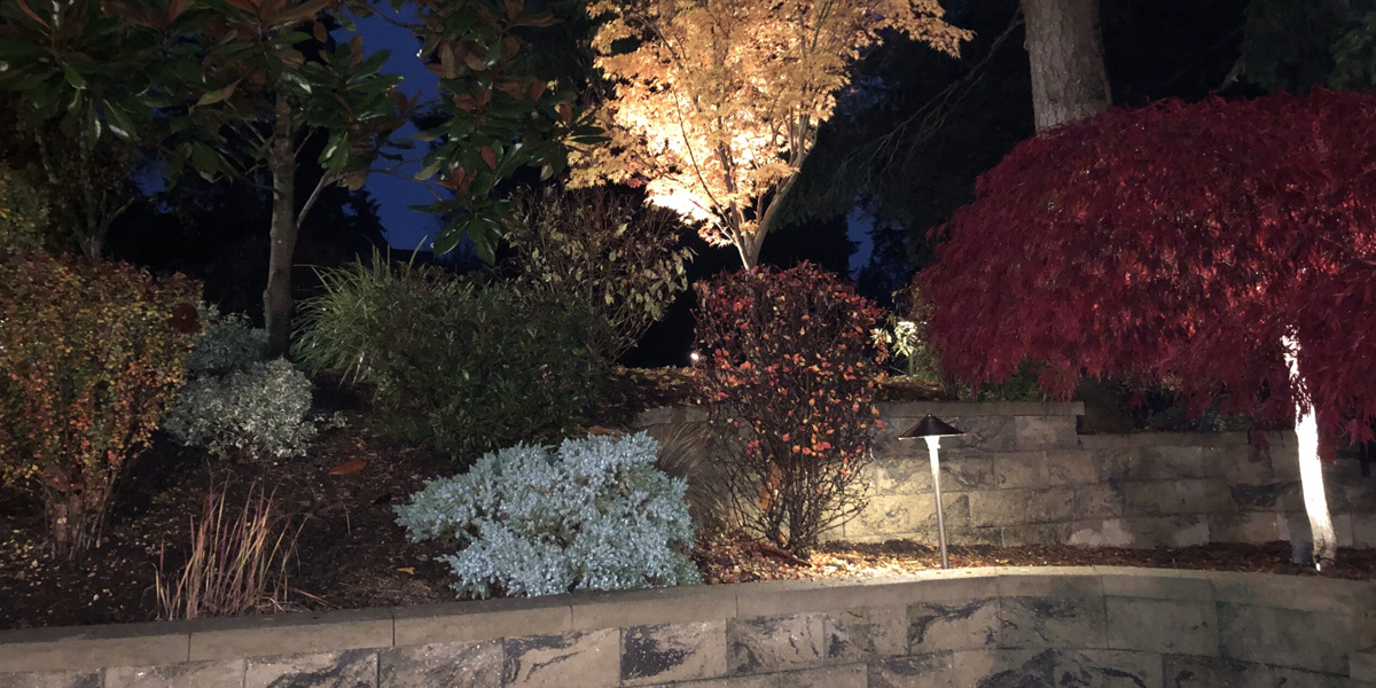
| Fall | Foliage color, seed heads, late bloom | Japanese maples, asters, sedums |
A landscape designed with this layering in mind does not require seasonal color installations to maintain its visual interest. The structure itself carries the calendar.
How to Find Landscape Design Services Near You
Searching for landscape design services near me returns providers at very different levels of practice. The distinction between a design service and an installation service with a preliminary sketch attached is real and consequential.
A genuine design process includes a site assessment before any plant is named. It produces a plan that specifies plants at mature size, not installation size, so the design accounts for where each specimen will be in five years rather than how it looks in a container at the nursery. It addresses drainage at bed borders and hardscape transitions rather than leaving water management to chance.
The questions that reveal which kind of service you are evaluating are direct: Do they assess the soil before recommending plants? Do they specify drainage provisions in the design? Do they account for existing canopy and root competition? Providers who answer these specifically are designing. Providers who redirect to portfolios and pricing are selling.
What a Complete Design Plan Includes
A complete landscape design plan from Perfect Touch Landscapes covers the full scope of what a property needs before installation begins.
- Site assessment documenting soil type, drainage patterns, light exposure by zone, and existing root competition
- Scaled planting plan with bed layout, hardscape, and plant placement specified at mature size
- Plant list with species, installation size, mature spread, and climate suitability notes
- Soil amendment recommendations by zone based on native soil conditions
- Drainage provisions at bed borders, hardscape transitions, and low-lying zones
- Maintenance guidance calibrated to the realistic care capacity of the property
- Phasing plan where the full scope exceeds current-season budget
Why Fall Is the Right Planning Window
Summer has just finished revealing where every property performed well and where it fell short. The evidence is fresh and the urgency of the growing season has passed. This is the most productive moment to commission a design.
A design commissioned in September or October has the lead time to be completed, reviewed, and permitted, where structural elements require it, before the spring installation window opens. Properties that begin the design process in March arrive at the installation season competing for the same crews and the same nursery stock as every other property that also decided spring was the right time to start planning.
Fall planning is not early. It is correctly timed.
Frequently Asked Questions
1. What do landscape design services in Everett typically cost?
Design fees vary by project scope and site complexity. Residential projects are typically structured as a flat design fee covering site assessment and plan delivery. Commercial projects may be phased across multiple deliverables tied to installation sequencing. Perfect Touch Landscapes provides project-specific proposals after an initial site consultation. The design fee is consistently recovered in avoided plant replacement and correction costs within the first two seasons.
2. How long does the landscape design process take?
A residential design from site assessment to plan delivery typically takes two to four weeks. Commercial projects with larger scope, phasing requirements, or structural elements requiring permitting take longer. Fall commissioning provides the lead time that spring commissioning does not, which is the primary reason we recommend beginning the conversation now rather than in March.
3. Can the design be phased to fit a multi-year budget?
Yes. Phased design is common and sensible for larger properties. The design covers the complete vision. Installation is sequenced by priority zone across one or more seasons. The critical requirement is that drainage and irrigation infrastructure is designed for the final scope from the start. Retrofitting these systems after phase one planting is established is considerably more disruptive and expensive than designing them correctly before the first plant goes in the ground.
4. Do I need professional landscape design services for a smaller property?
For any project involving meaningful plant investment, irrigation, or hardscape, a design plan reduces the risk of costly mistakes. The design cost is typically recovered within the first two seasons through avoided plant replacement and correction work. Even a simplified site assessment and plant list with drainage notes provides substantially better outcomes than selecting plants without site-specific guidance.
5. What is the difference between a landscape designer and a landscape architect?
Landscape architects are licensed professionals handling grading, drainage engineering, and structural design. Landscape designers plan planting, hardscape, and aesthetic layout. For most residential and commercial landscape improvement projects, a landscape designer has the appropriate scope. Projects involving significant grade change, structural retaining walls, or engineered drainage may benefit from landscape architect involvement, which we can coordinate as part of the project team.
The Land Has Already Decided What It Can Support
A well-designed landscape does not impose itself on its site. It finds the shape the site was already moving toward and gives it form. The clay remembers its drainage. The canopy defines its shade. The root systems have already claimed their territory. A design that works with these facts produces a property that looks, over time, less like something that was planned and more like something that grew.
Perfect Touch Landscapes provides “landscape design services near me” throughout the Everett area with this understanding at the foundation of every project. Our landscape design services in Everett begin with the site and end with a plan the land can actually sustain. If your property is ready for that conversation, fall is the right time to begin it.